This BLUETTI B300K review looks at a power setup built for larger loads and longer stays away from the grid: the Apex 300 station, B300K expansion battery, and Charger 1 alternator charger.
Its capacity, 120V/240V output, and several recharge paths make it worth considering for RV use, cabin power, and home backup, provided you have room for a substantial system.
Apex 300 B300K Review Summary
The quick verdict
900+ ratings
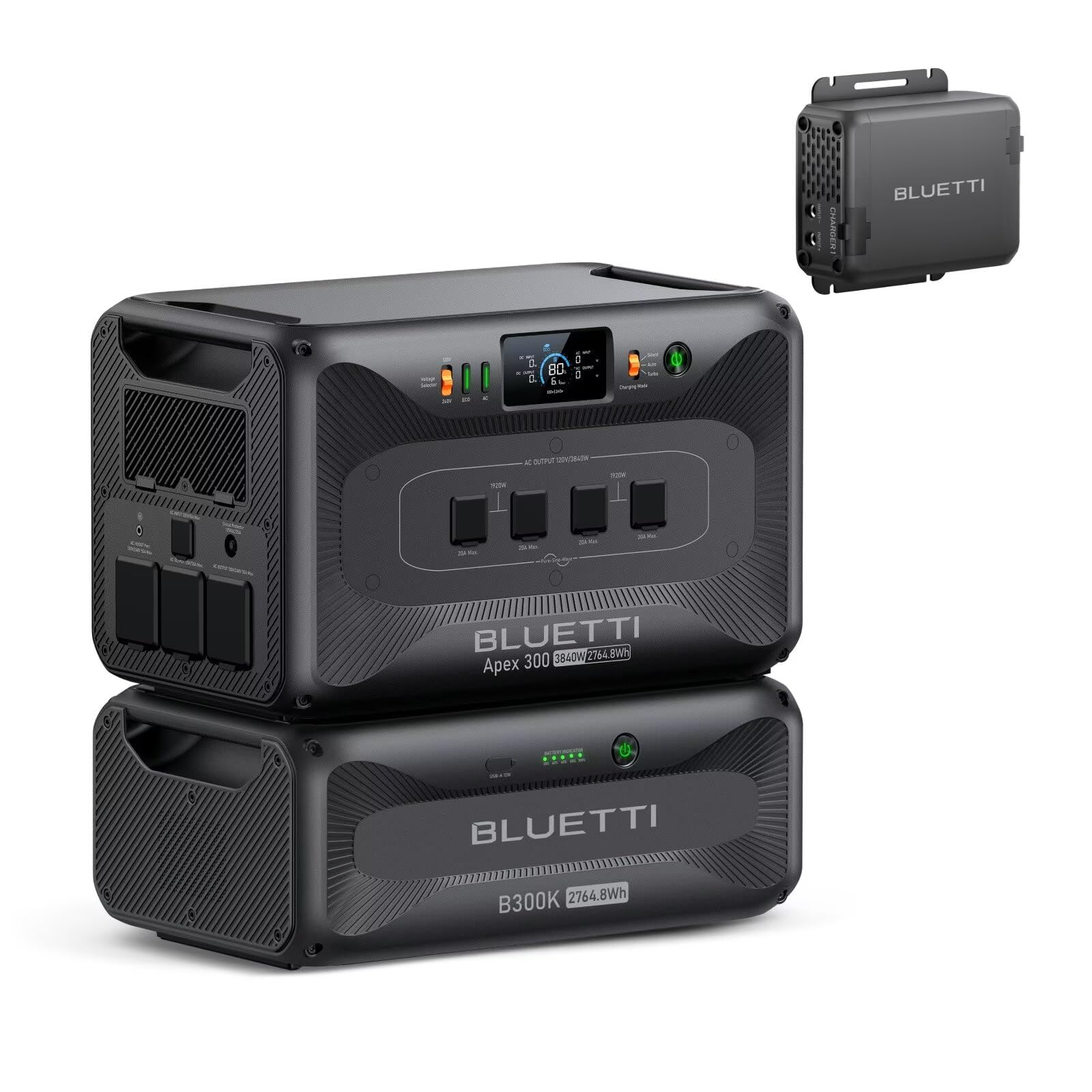
Read Amazon ReviewsBLUETTI Apex 300 and B300K
A high-output expandable power setup for RV owners, cabins, and households that need substantial backup capacity and multiple charging options.
- The package combines the Apex 300 power station with a B300K expansion battery rated at 5.5kWh.
- The Apex 300 is listed with 3,840W output, six AC outlets, and a 7,680W surge figure.
- Simultaneous 120V/240V output is intended to accommodate equipment requiring either voltage.
- Solar charging supports up to 2,400W input through dual MPPT; the product description gives charging times of 80% in 40 minutes and full charge in 2.1 hours at full power.

Pros
- Large 5.5kWh capacity supports longer-duration plans than a small portable station.
- High listed AC output and six outlets give buyers flexibility for multiple appliances and devices.
Consider before buying
- The system is a substantial setup, so buyers should consider storage space, handling, and where it will be used before choosing it.
- The B300K and Charger 1 ship separately, which may mean the complete package does not arrive at the same time.
Read the full review summary
The appeal is the combination of 5.5kWh of battery capacity with 3,840W output and a 7,680W surge figure, plus six AC outlets and simultaneous 120V/240V output.
That gives buyers more headroom for a mix of everyday devices and larger appliances than a compact camping power station is designed to provide.
Solar input is listed at up to 2,400W, and the bundle includes a Charger 1 for vehicle-based charging.
This configuration is best suited to RV owners, cabin users, and households planning for outages who value flexible charging and want a battery system they can expand.
It is a less natural fit for occasional phone or laptop charging: the capacity and output are substantial, and the B300K and Charger 1 ship separately, so buyers should plan for staged delivery and check that the complete setup suits their intended installation.
The buying factors
Apex 300 B300K Scorecard
Editorial scores reflect listed features and buyer fit; they are not laboratory measurements or customer ratings.
Stored energy
The 5.5kWh B300K capacity gives this setup a sizable reserve for off-grid stays and backup loads.
AC output capability
The Apex 300 provides 3,840W output, six AC outlets, and a listed 7,680W surge figure for a broad range of appliance needs.
Voltage flexibility
Simultaneous 120V/240V output supports buyers whose planned setup needs both voltage options.
Solar charging potential
Up to 2,400W solar input and dual MPPT offer substantial solar charging potential when paired with suitable panels and conditions.
Vehicle charging
The included Charger 1 adds a dedicated alternator charging route for road travel and RV use.
Portability
A 5.5kWh, high-output system is aimed at capacity and capability; buyers should plan for space and handling rather than frequent casual carrying.
Key Features and Specifications of Apex 300 B300K
- The package combines the Apex 300 power station with a B300K expansion battery rated at 5.5kWh.
- The Apex 300 is listed with 3,840W output, six AC outlets, and a 7,680W surge figure.
- Simultaneous 120V/240V output is intended to accommodate equipment requiring either voltage.
- Solar charging supports up to 2,400W input through dual MPPT; the product description gives charging times of 80% in 40 minutes and full charge in 2.1 hours at full power.
- The B300K uses LiFePO4 chemistry and is rated for 6,000-plus cycles to 80% capacity.
- Charger 1 is a DC-DC alternator charger intended to recharge the system from a vehicle.
- The package also lists an AC charging cable, car charging cable, grounding screw, and user manual; the B300K and Charger 1 ship separately.
Pros and Cons of Apex 300 B300K
Pros
- Large 5.5kWh capacity supports longer-duration plans than a small portable station.
- High listed AC output and six outlets give buyers flexibility for multiple appliances and devices.
- Simultaneous 120V/240V output is useful for setups with mixed voltage requirements.
- Solar and alternator charging add options for locations where grid charging is inconvenient.
Consider before buying
- The system is a substantial setup, so buyers should consider storage space, handling, and where it will be used before choosing it.
- The B300K and Charger 1 ship separately, which may mean the complete package does not arrive at the same time.
- To make the most of the stated solar input and charge rates, buyers need compatible charging equipment and suitable conditions; confirm what is included for the setup you plan.
Who Should Buy Apex 300 B300K?
Good fit
Consider this package if you need a high-capacity power source for an RV, cabin, or planned home backup setup.
The 5.5kWh battery, 3,840W output, and simultaneous 120V/240V capability give it a useful mix of storage and output for buyers with more demanding power needs.
The charging choices are another reason it may fit an off-grid routine: the Apex 300 supports up to 2,400W of solar input, while the included Charger 1 provides an alternator charging path.
Before buying, map your expected loads and recharge plan, and confirm that the separately shipped components and any additional charging equipment fit your timeline and setup.
Who should skip it
Skip this configuration if your main need is occasional charging for phones, cameras, or a laptop. Its large capacity and output are more system than those light-duty tasks typically call for.
Look elsewhere if you need a compact station for frequent carrying, or if your planned appliances do not need this level of output or voltage flexibility. First check each appliance's voltage and power needs against the system's output.
How the Apex 300 B300K Fits Bigger Power Needs
Capacity for longer stays and outages
The B300K's 5.5kWh capacity is a central reason to choose this configuration.
It gives buyers a larger energy reserve for planned off-grid use or backup, but actual runtime depends on the appliances connected and how much power they draw.
Listing your essential loads and estimated use helps determine whether this reserve suits your situation.
Output and voltage planning
The Apex 300's 3,840W output, six AC outlets, and simultaneous 120V/240V capability make the setup relevant to buyers with varied appliance requirements. Those figures describe capacity, not a guarantee that every combination of appliances can run together.
Check the voltage and power demands of the devices you intend to use, especially if you expect to run several at once.
Charging away from the grid
Up to 2,400W of solar input and dual MPPT make solar a significant part of the system's design, while Charger 1 adds an alternator route for vehicle travel.
The listed charge times assume full charging power; panel availability, sunlight, vehicle setup, and other conditions affect what a buyer can achieve. Plan around your likely charging conditions rather than treating a maximum input as constant.
A setup that rewards advance planning
This is a system to plan around, not a small device to toss into a day bag. Decide where the station and battery will live, how you will connect the loads, and which charging methods you will use.
Since the B300K and Charger 1 ship separately, allow for their separate arrival when scheduling a trip or preparing a backup setup.
Alternatives to Apex 300 B300K
Battery-focused alternative
900+ ratings
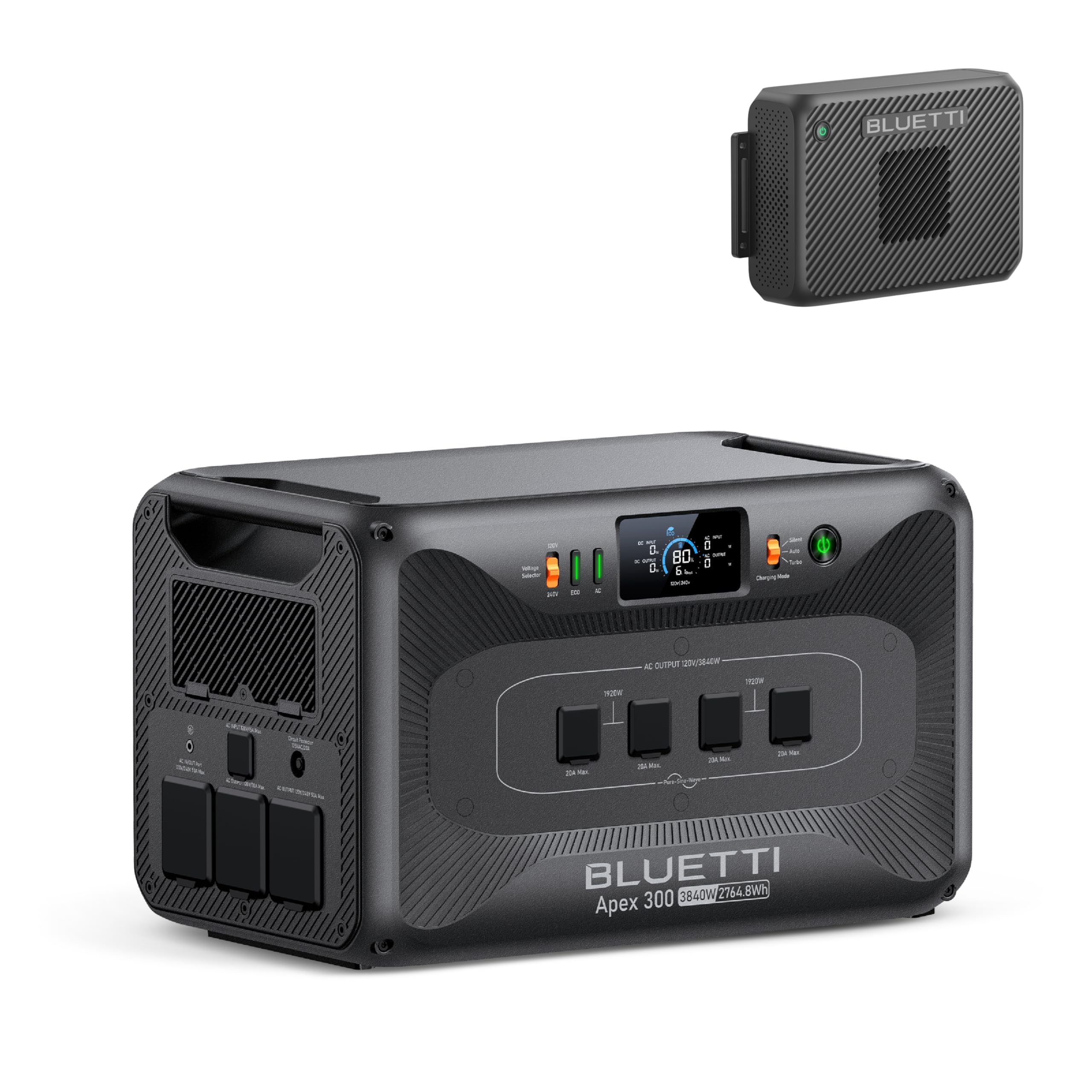
Read Amazon ReviewsBLUETTI Apex 300 with Charger 2
Choose the reviewed package if the larger included battery reserve and Charger 1 configuration suit your needs. Consider this alternative if its smaller included battery and Charger 2 dual-input charging approach better match your vehicle and solar plans.
- This configuration pairs the Apex 300 with a 2,764.8Wh battery and Charger 2, which supports up to 1,200W dual-input charging and up to 800W from the alternator alone; it also lists 2,400W built-in solar input.
- The reviewed package pairs the Apex 300 with a 5.5kWh B300K expansion battery and Charger 1 for alternator charging.
Outdoor Generators alternative
900+ ratings
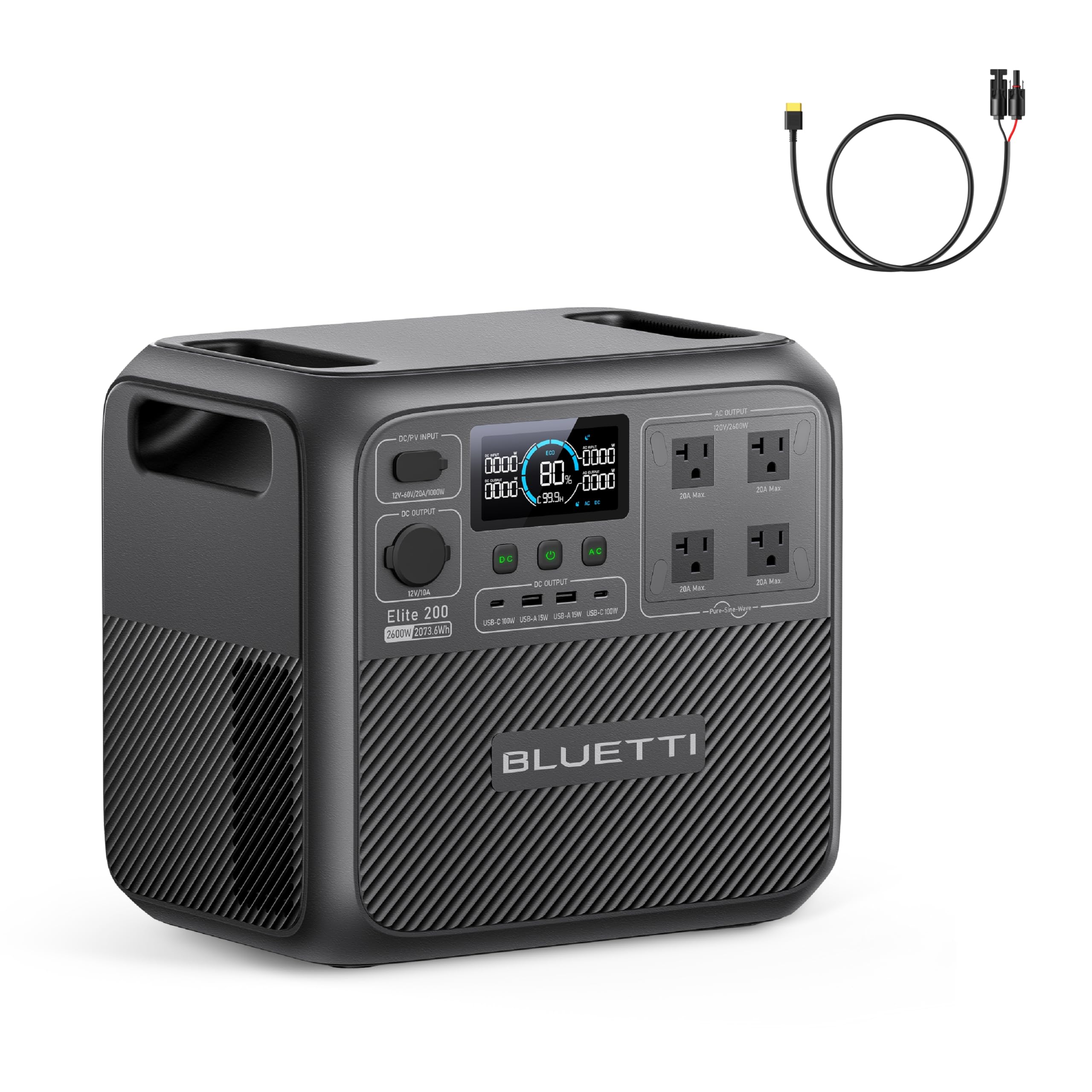
Read Amazon ReviewsBLUETTI Elite 200 V2
The Elite 200 V2 is a more compact-capacity choice for buyers who need less stored energy and output.
The Apex 300 and B300K make more sense when the larger battery reserve and 120V/240V output are central to the plan.
- The Elite 200 V2 has 2,073.6Wh capacity and 2,600W AC output, with a listed 3,900W power-lifting figure and four AC outlets.
- Its charging options include AC, solar, and alternator charging with a compatible Charger 2.
- The Apex 300 and B300K package is built around 5.5kWh capacity, 3,840W output, and simultaneous 120V/240V power.
Is Apex 300 B300K Worth It?
The BLUETTI Apex 300 and B300K is worth considering for buyers who need substantial stored energy, high AC output, and flexibility across solar, vehicle, and grid charging.
Its 5.5kWh capacity and simultaneous 120V/240V output are the key reasons to choose it.
Buy with a clear plan for your loads, charging equipment, storage space, and the separately shipped components. For lighter or more portable power needs, a smaller station will likely be a better match.
Your review at a glance
900+ ratings
Read Amazon ReviewsBLUETTI Apex 300 and B300K
A high-output expandable power setup for RV owners, cabins, and households that need substantial backup capacity and multiple charging options.
- The package combines the Apex 300 power station with a B300K expansion battery rated at 5.5kWh.
- The Apex 300 is listed with 3,840W output, six AC outlets, and a 7,680W surge figure.
- Simultaneous 120V/240V output is intended to accommodate equipment requiring either voltage.
- Solar charging supports up to 2,400W input through dual MPPT; the product description gives charging times of 80% in 40 minutes and full charge in 2.1 hours at full power.